


Chiropractic Services
Evidence-informed, patient-centered care using Diversified, SOT, Drop-Assist, Activator, and Flexion-Distraction techniques—tailored to your goals for pain relief, health, and performance.
Diversified (HVLA) | Sacro Occipital Technique (SOT) | Thompson / Drop Assisted | Activator (Instrument Adjustment | Flexion/Distraction (Cox Technique)
Personalized Plans
Every visit blends manual care with movement prescriptions and load management appropriate to your condition and sport.
Gentle to High-Velocity Options
From low-force instrument and pelvic blocking to classic HVLA adjustments and decompression-style mobilization.
Evidence-Informed
Aligned with current guidelines and research on pain science, neuromodulation, and spine biomechanics.
Learn More about Neuro-Structural Function, Spinal Health and Chiropractic
Why Spinal Health and Posture Matter
Your Spine is YOUR Nervous System Highway
Your spine doesn’t just hold you upright—it protects the spinal cord, which carries signals between your brain and every organ, muscle, and tissue.
When spinal joints lose proper alignment or movement:
-
Nerve signals can become distorted or delayed
-
Muscles may become tight, weak, or uncoordinated
-
Organs can receive altered input, affecting function
Think of it like a kink in a hose—flow still happens, but not optimally. Overtime this can lead to Chronic Pain, Dizziness, Tinnitus, Increased Stress Response, Mental Confusion and Fatigue and Myelopathy.


Here is what you Might NOT know about abnormal Spinal Movement and Health

Bad Posture
Posture is governed physiologically by continuous integration of proprioceptive, vestibular, and visual input, processed by the central nervous system to regulate muscle tone and maintain upright stability against gravity. The spine plays a central role in this system, as it is a primary source of proprioceptive input via joint mechanoreceptors and paraspinal muscle spindles.
Symptoms:
-
Pain
-
Blurred Vision
-
Dizziness
-
Tinnitus
-
Muscle Spasm
-
Headaches
Research:
Minimal Changes in Spinal Curve were associated 100% with abnormal organ function found during autopsy.
Due to the forward head facedown lifestyle from excessive computer and cell phone usage, the posterior ligament complex of the cervical spine undergoes a slow stretch termed “creep” which can, over time, lead to cervical instability and a breakdown of the cervical curve.
This loss of spinal curvature is associated with decreased vertebral artery hemodynamics to the brain. Meaning YOUR Brain gets less blood flow, between 23.0% and 225.9%

Muscle
Muscles: Altered alpha and gamma motor neuron activity leads to changes in muscle tone, recruitment patterns, and coordination (facilitation or inhibition).
Symptoms:
-
Pain
-
Muscle Splinting. This is when your muscle seems to be tight all the time, even when you do things to try to relax, your muscle still stays tight. This is a neurological protective action, this is why your tight muscles do not get better over time or with typical treatment.
Research:
Abnormal spinal movement results in muscle guarding, call muscle splinting. When this occurs, the muscle that is "splinting" will grow new nerves and arteries to help it function, called neurogenesis and angiogenisis. This is a precursur to chronic pain.
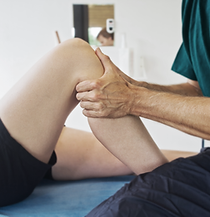
Joints
Joints: Disrupted proprioceptive input impairs joint position sense and alters reflex stabilization, increasing mechanical stress and reducing movement efficiency.
Symptoms:
-
Segmental Pain
-
Muscle Guarding
-
Stiffness
-
Reduced Range of Motion
-
Compensation Patterns
Research:
Neurophysiological effects of spinal manipulation. Recent findings demonstrate that spinal manipulation modifies the discharge of Group I and II afferents.
Spinal manipulation evokes changes in the neuromusculoskeletal system.
The evidence indicates that the impulse load of a spinal manipulation impacts proprioceptive primary afferent neurons from paraspinal tissues. In addition, spinal manipulation can affect pain processing, by altering the central facilitated state of the spinal cord, and can affect the motor control system.

Fascia
Fascia: Through autonomic and somatic nervous system influence, changes in neural drive affect fibroblast activity, tissue hydration, and fascial tension, contributing to stiffness or densification.
Symptoms:
Fascial dysfunction is not just “tight tissue”—it’s a physiological alteration in a continuous connective tissue network that affects force transmission, proprioception, circulation, and neural signaling. When fascia loses its normal viscoelasticity and glide, it creates widespread and often non-local symptoms including
-
Pain
-
Adhesions
-
Stiffness
-
Pulling Sensation
-
Burning
Research:
Fascia is richly innervated with free nerve endings, mechanoreceptors, and afferent fibers. These receptors connect directly to the spinal cord dorsal horn (WDR neurons). This means fascia is not passive, it is a sensory organ integrated with spinal processing. Any spinal dysfunction (facet, disc, ligament) will alter sensory input into fascia, and vice versa. Abnormal fascial movement alters spinal movement and loading patterns which results in changes in autonomic output, fascial tone & stiffness.
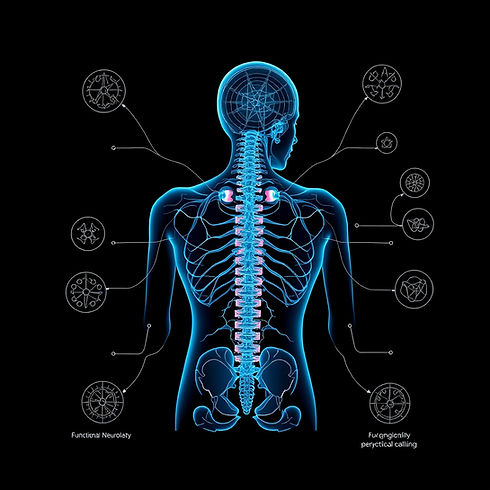
Types of Chiropractic Care we offer
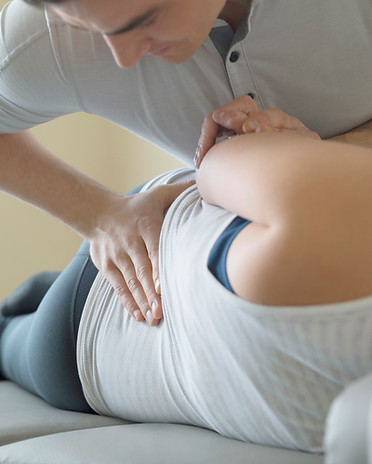
Diversified (HVLA)
The classic hands-on chiropractic adjustment
Diversified is a high-velocity, low-amplitude (HVLA) manual manipulation used to restore joint motion and reduce pain. It’s the most widely taught and practiced chiropractic technique.
Benefits
-
Rapid pain modulation for mechanical neck and low back pain
-
Improved segmental mobility and range of motion
-
Short-term neuromodulatory effects that may down-regulate nociception
-
Often combined with exercise for longer-term results
Physiology
A quick, precise thrust stimulates joint mechanoreceptors (type I/II) and inhibitory interneurons in the dorsal horn, which can elevate pressure-pain thresholds and reduce central sensitization. Studies also report short-term changes in corticospinal drive and autonomic balance (e.g., HRV).
For Pain
Useful for acute, subacute and chronic nonspecific spine pain when there are motion restrictions. Clinical guidelines include spinal manipulation as an evidence-based, non-pharmacologic option.
For Health
By restoring normal joint kinematics and proprioceptive input, HVLA may improve movement quality and reduce protective muscle guarding.
For Sport
May acutely improve ROM, strength output, and motor control in select athletes—helpful pre- or between training blocks when motion restriction limits performance.

Activator (instrument Assisted)
Very low-force
Spring-loaded instrument adjustments
Benefits
-
Precise force vectors with reproducible settings
-
Well tolerated in post-acute, hyperalgesic or osteoporotic populations (when appropriate)
-
Can be applied to extremities as well as the spine
Physiology
The brief impulse stimulates articular and periarticular mechanoreceptors with minimal joint excursion, producing neuromodulatory effects similar to manual HVLA but with lower peak forces.
For Pain
Appropriate for focal facet or costotransverse pain, cervicogenic headache patterns, or when guarding limits manual methods.
For Health
Supports gentle proprioceptive retraining with minimal soreness.
For Sport
Useful for precision tune-ups on wrists, elbows, ankles and feet without affecting training load.
Activator delivers a controlled, high-speed, low-amplitude impulse at specific points without manual cavitation. It’s ideal for patients who prefer or require minimal force.

Flexion-Distraction (Cox® Technique)
Decompression-style mobilization for discs.
Benefits
-
May lower intradiscal pressure and tension on nerve roots
-
Improves segmental mobility with minimal pain provocation
-
Commonly used for disc herniation, radiculopathy and spinal stenosis
Physiology
Biomechanical studies demonstrate reduced intradiscal pressure during Cox flexion-distraction and manual cervical distraction. Decompression plus oscillatory mobilization may improve nutrient diffusion and reduce chemical nociception.
For Pain
Often selected for discogenic pain, radiculopathy and stenosis where traction-like unloading is beneficial.
For Health
Gentle motion can restore normal movement patterns and reduce paraspinal spasm.
For Sport
Supports recovery when axial loading and disc irritability limit training capacity.
Performed on a specialized table that gently flexes and distracts the spine to reduce intradiscal pressure, open foramina, and mobilize segments without thrust.

Thompson / Drop-Assist
Precision thrusts with drop-piece assistance
Benefits
-
Lower perceived force with effective segmental correction
-
Efficient for pelvic, lumbar and thoracic listings
-
Often comfortable for older adults or acute pain presentations
Physiology
The rapid impulse with reduced tissue drag increases the rate of force development while minimizing amplitude. Mechanoreceptor activation and reflex inhibition may decrease hypertonicity and pain sensitivity.
For Pain
Helpful when guarding makes traditional HVLA uncomfortable; can reduce local pain sensitivity and improve motion quickly.
For Health
Supports upright posture and balanced gait mechanics through targeted lumbopelvic corrections.
For Sport
Good between sessions or competitions when a lighter-force approach is preferred.
Drop tables momentarily release under a targeted region during a light thrust. The drop reduces peak force on the patient while allowing a fast, accurate adjustment.

Sacro Occipital Technique (SOT)
Gentle pelvic blocking and craniosacral-informed methods
Benefits
-
Very gentle—often well tolerated in sensitive or chronic cases
-
Targets lumbopelvic imbalance, sacral nutation/counternutation patterns
-
May reduce myofascial tone and improve postural symmetry
Physiology
Sustained positioning and low-force contacts provide prolonged afferent input that can reduce paraspinal hypertonicity, alter pelvic ligament tension, and modulate dural meningeal strain through the sacrum-cranium connection.
For Pain
A conservative option for persistent low back/pelvic pain or when higher-force thrusts are not indicated.
For Health
Emphasizes whole-body balance; may support breath mechanics and gentle autonomic downshift in tense individuals.
For Sport
Useful during deload weeks or when athletes need pelvic symmetry without post-adjustment soreness.
SOT uses wedge-shaped pelvic blocks and low-force contacts to influence lumbopelvic mechanics, dural tension and craniosacral dynamics. It is individualized to the patient’s category and indicators.
Research: Chiropractic Works!
Health is really about one thing – function. How well you are functioning determines how truly well you are. Health and wellness are about more than just ‘feeling good'; they are about functioning at your ultimate potential. When your body is functioning at 100%, you have the innate ability to adapt to anything that occurs in your environment and you can continually maintain optimal health. This is how we can manage STRESS!
-
[1] Short-Term Effects of Spinal Manual Therapy on the Nervous System: Systematic Review (2025).
-
[4] American College of Physicians Guideline for Nonradicular Low Back Pain (2017).
-
[6] Single session spinal manipulation increases plantar flexor strength and cortical drive (2018).
-
[7] Lumbar spinal manipulation reduces local pain sensitivity acutely in chronic LBP (2024).
-
[8] Cox Flexion-Distraction: Intradiscal pressure reduction cadaveric pilot (2022).
-
[9] Manual cervical distraction reduces intradiscal pressure (2013).
-
[10] Activator Adjusting Instrument: Systematic review of clinical trials (2012).
-
[11] Chiropractic treatment approaches overview (2014) – notes on Thompson/Drop usage.
-
[12] Recent LBP clinical practice guidelines summary (2024).

Ready to Move and Feel Better?
Book your Initial Assessment Today!